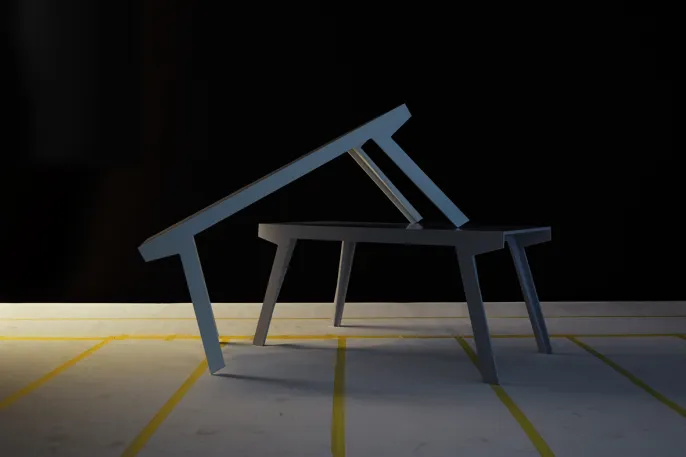
Issue 03
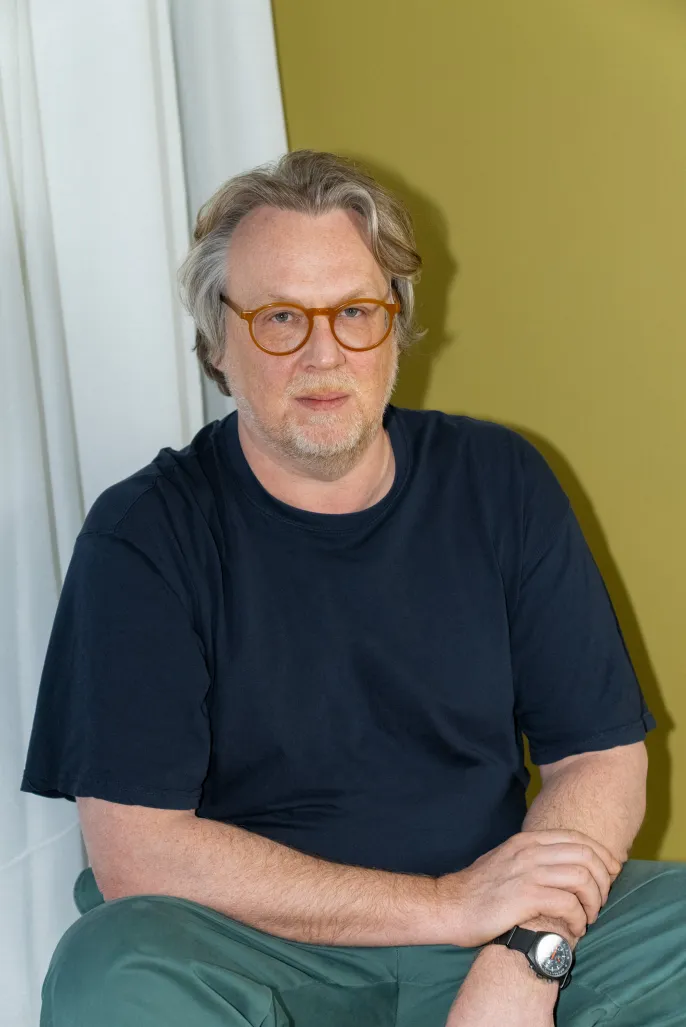
Steffen Eberhardt
Interview with Steffen Eberhardt – Interiordesigner of Plot Projects and founder of Eberhardt Objects in Frankfurt am Main.
Interview and photos:
Ruth Maren Neubert
Frankfurt, January 15. 2026
STEFFEN EBERHARDT
born in Bad Orb
Studied Architecture in Darmstadt
currently lives and works in Frankfurt am Main
RUTH MAREN NEUBERT
Interview, Architektur
Founded in 2015, Eberhardt Objects is a Frankfurt based design studio for concept development interior and product design.
Tell us a bit about yourself. Are you from Frankfurt? Before studying, you trained as a carpenter. How did that come about, and what path did you take afterward?
I began studying architecture in Darmstadt, but before that I completed an apprenticeship as a carpenter. The desire to become an architect was there from an early age. When my parents were building their house, there was a moment that has stayed with me to this day: The architect came by in the evening, laid out his plans, and spoke about the design. Suddenly, it was all about ideas, decisions, and mentally exploring different possibilities. There was a particular calmness to it. That was when I understood that architecture has a lot to do with imagination and with the ability to translate thoughts into clear forms.
What fascinated me most at the time was designing for others; putting yourself in people’s shoes, taking their wishes seriously, and developing something coherent from them. I found that slow process of approaching a solution that truly fits incredibly compelling.
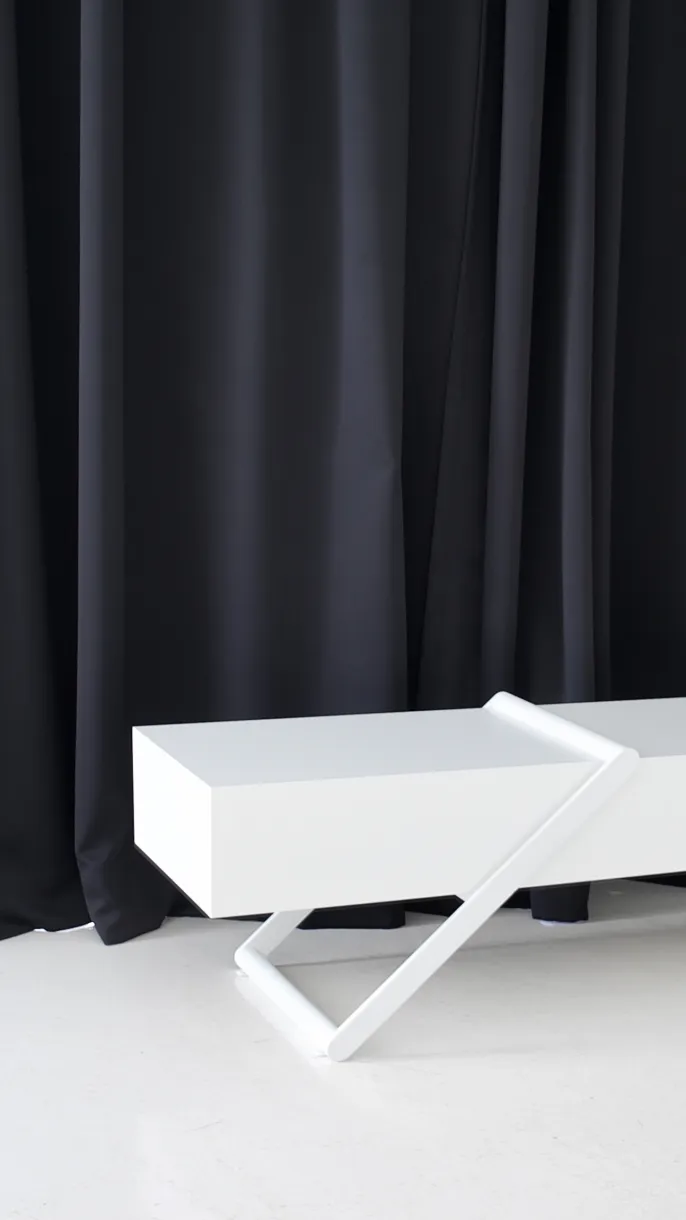
“What fascinated me most at the time was designing for others; putting yourself in people’s shoes, taking their wishes seriously, and developing something coherent from them.“
When it comes to furniture and interiors: Were there any designers or architects who influenced you during your studies and whom you still look to today?
I’ve never strongly oriented myself toward trends or shifting role models. It was always important for me to develop my own understanding of design and to pursue it consistently. One architect who has had a lasting influence on me is Mies van der Rohe.
What continues to impress me about his work is the precision of his floor plans. With very few lines, he creates spaces that feel open while remaining clearly structured. This balance between openness and order has strongly influenced me—not as a stylistic reference, but as an attitude. It’s about clarity, proportion, and a sense of naturalness within a space.
“ This balance between openness and order has strongly influenced me—not as a stylistic reference, but as an attitude.“
In 2025, you celebrated ten years of Eberhardt Objects. If you were starting from scratch today, is there anything you definitely wouldn’t do the same way again?
I would follow the same path again. The combination of craftsmanship and academic study was exactly right for me.
My carpentry apprenticeship not only gave me a great deal professionally, it also enabled me to finance my studies independently. It wasn’t a detour. I enjoyed it, and it gave me a solid foundation: I learned how materials work, how things are constructed, and why details are crucial.
At the same time, working in the craft allowed me to pay for my studies and remain independent.
Looking back, it was precisely this combination of craftsmanship and design that shaped my further path.
What I would do differently relates to how I handle my own work. I would make it visible to the outside world earlier. That’s still something I find challenging, but consistently presenting your work is essential. Today I know: Good work only has an impact if you make it visible.
“Good work only has an impact if you make it visible.”
And if you had chosen something completely different: What would it have been? Have you ever questioned whether you chose the right path?
From early on, I knew I wanted to go into a craft. I seriously considered both carpentry and timber framing. I ultimately ruled out becoming a carpenter because of my fear of heights, even though I was always fascinated by the tradition of the Walz.
I was drawn to the idea of traveling and learning from others, in line with the tradition of the Walz. It wasn’t about money, but about experiencing the craft intensively, exchanging knowledge, and learning through hands-on practice. What particularly appealed to me was working with my hands, constantly being on the move, and fully immersing myself in craftsmanship.
I would choose this path again. The combination of craftsmanship, design, and spatial thinking suits me. Everything else developed logically from that.

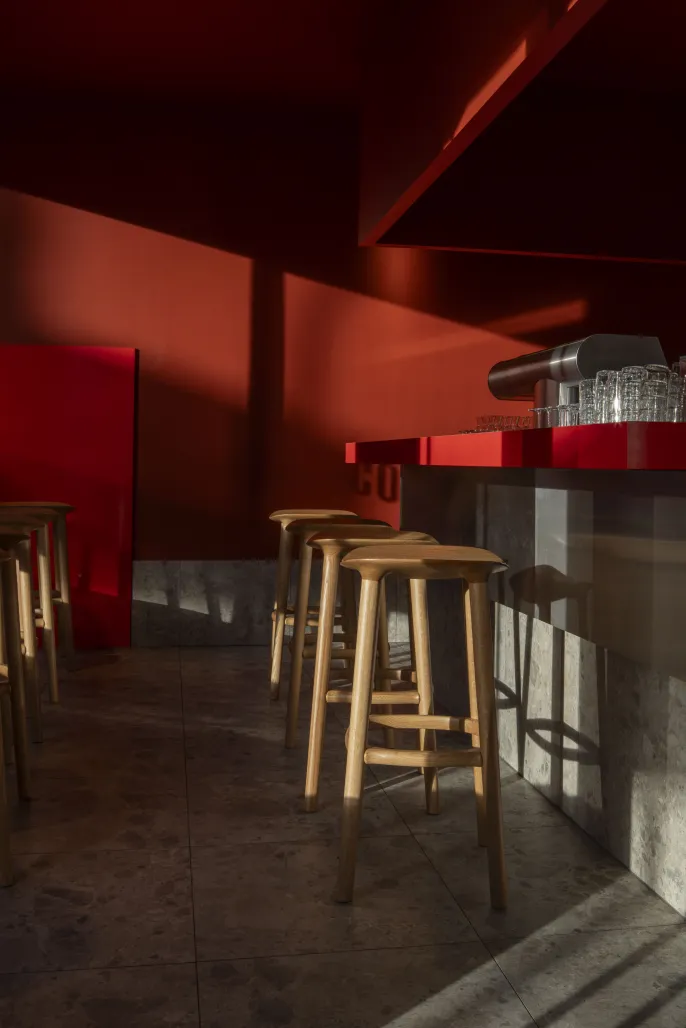
"The goal is to develop a coherent whole from individual decisions without overloading the space."
You’ve realized several hospitality projects in Frankfurt. Plot Projects, on the other hand, started as a very open concept. How did you approach the space when idea, construction, and design were developing simultaneously?
A decisive factor was trust. I knew the clients well and had a very clear briefing. Early on, I understood which functions the space needed to fulfill and that it should be versatile. The challenge was to create tension within a rather simple spatial structure.
I work a lot with proportions, heights, and clear spatial interventions. The goal is to develop a coherent whole from individual decisions without overloading the space. Especially in reduced concepts, every detail carries weight. When working minimally, nothing can be incidental.
For me, spaces ultimately emerge through light. Good lighting is not constantly present, but precisely where it’s needed. It directs attention, creates atmosphere, and organizes the space. That’s why in our projects we work very consciously with light, color, and proportion.